
A subject-by-subject guide for K–8 district curriculum directors evaluating arts integration programs
When district curriculum leaders evaluate a visual arts program, the core question is rarely “Is this good art education?” It’s “Does this fit into everything else we’re already teaching — or does it require carving out entirely separate time?”
The best art history programs do both. They stand on their own as rigorous, standards-aligned visual arts instruction, and they connect naturally to what students are already learning in history, language arts, science, and social studies. Meet the Masters (MTM) — a structured K–8 visual arts curriculum used by schools and districts nationwide — was built with that cross-curricular reality in mind.
Here is a subject-by-subject breakdown of how specific MTM artist lessons support arts integration across the K–8 curriculum.
How Art History Lessons Support History and Social Studies
Art history and history are natural partners. Works of art are primary sources — visual documents that capture how people lived, what they believed, and what they valued.
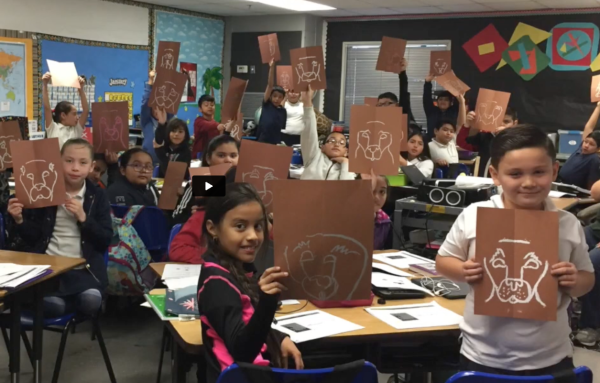
The MTM lesson on Frederic Remington places students directly in the world of the American West. His paintings and sculptures document the lives of cowboys, Native Americans, and U.S. cavalry in the late 1800s. Students examining Remington’s work are doing exactly what historians do: reading an image as evidence of a time and place.
The lesson on Grant Wood — best known for American Gothic — extends this into the 20th century. Wood’s paintings of rural American life connect naturally to units on the Great Depression and the regionalist movement that sought to affirm American identity during a national crisis. His work prompts students to ask: Who are these people? What does this scene tell us about when and where it was made?
These lessons don’t simply complement history units — they deepen them by giving students a different kind of evidence to examine, discuss, and interpret.
How Art History Lessons Support Language Arts and Literacy
Art history offers some of the richest cross-curricular connections available for language arts instruction. Analyzing a work of art requires the same core skills as analyzing a text: identifying point of view, interpreting symbolism, inferring meaning, and understanding how an author — or artist — shapes an audience’s experience.
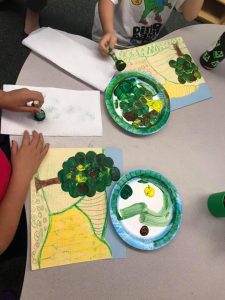
The MTM lesson on Marc Chagall introduces students to visual storytelling and symbolism. His dreamlike imagery invites discussion of metaphor, narrative, and personal meaning — concepts that map directly to reading comprehension and writing standards at every grade level.
The lesson on Faith Ringgold goes further. Her story quilts, rooted in African American history and personal narrative, offer a natural bridge to memoir writing, point of view, and cultural storytelling traditions. Students analyzing Ringgold’s quilts ask the same questions a skilled reader asks of any text: Who is telling this story? What do they want us to feel? What perspective is centered, and whose is left out?
For curriculum directors working to strengthen literacy across content areas, these lessons deliver real instructional leverage — not as add-ons, but as genuine extensions of ELA work.
How Art History Lessons Support Science
Science and visual art share a foundational skill that is often underestimated: careful, disciplined observation. Before a scientist can measure or hypothesize, they must first see clearly. Art history lessons that emphasize observation train this skill directly.
The MTM lesson on Georgia O’Keeffe is one of the strongest examples. Known for her monumental close-up paintings of flowers and desert landscapes, O’Keeffe teaches students to look at natural forms with precision and patience — exactly the observational habit science requires. Her work also invites questions about scale, environment, and the relationship between art and the natural world.
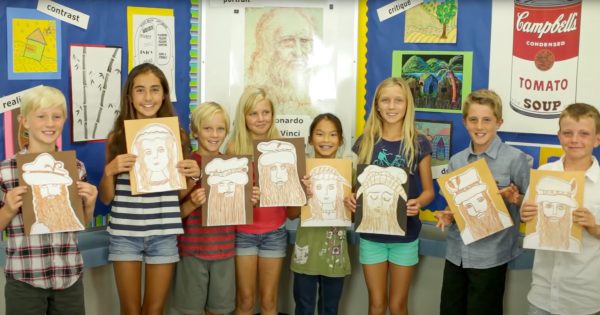
The MTM lesson on Leonardo da Vinci goes even further. Da Vinci was simultaneously an artist and a scientist, and his notebooks are among the most remarkable records of human curiosity ever produced. The MTM da Vinci lesson introduces students to his anatomical studies, mechanical inventions, and observational drawings — making it a natural companion to science units on the human body, simple machines, or the nature of scientific inquiry itself.
How Art History Lessons Support Geography and Global Studies
A well-sequenced art history curriculum is also a global education curriculum. MTM’s 35-artist roster spans continents and centuries, giving teachers a built-in resource for cultural and geographic learning.
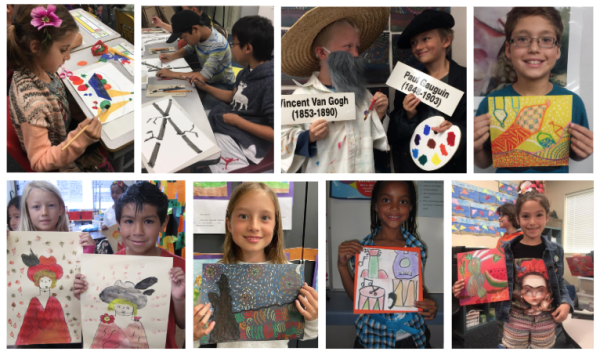
The lesson on Katsushika Hokusai introduces students to Japanese woodblock printmaking and the aesthetic traditions of Japanese art — a natural tie-in to social studies units on Asia and world cultures. The lesson on Paul Gauguin opens a window onto Polynesian culture, while also raising thoughtful questions about how artists represent cultures that are not their own. The Henri Rousseau lesson — featuring lush, imaginary jungle scenes — pairs well with geography units on tropical ecosystems, while exploring what it means to build an entire imaginative world from curiosity and observation rather than direct experience.
In each case, the art history content carries cultural and geographic learning that reinforces and enriches what students are already studying.
Why Cross-Curricular Art Integration Matters for K–8 Districts
Instructional time is finite. District curriculum leaders are right to ask whether every program in the schedule earns its place — not just in isolation, but in relationship to everything else students are learning.
Meet the Masters was designed so that every lesson does double duty. Each unit delivers rigorous, standards-aligned visual arts instruction while creating natural connections to history, literacy, science, and global studies. The cross-curricular links aren’t incidental — they’re built into the curriculum structure, the artist selections, and the way lessons are sequenced across grade levels.
When teachers teach Remington, they’re also teaching historical analysis. When they teach Ringgold, they’re also teaching narrative voice. When they teach da Vinci, they’re also teaching scientific curiosity. That’s what genuine arts integration looks like — and it’s what Meet the Masters delivers in K–8 classrooms nationwide.
Frequently Asked Questions
What is cross-curricular art integration?
Cross-curricular art integration is the practice of connecting visual arts instruction to other academic subjects — such as history, language arts, science, and social studies — so that learning in one area reinforces learning in another. Effective integration doesn’t dilute the arts; it enriches both the art lesson and the connected subject.
Which art history programs support cross-curricular learning in K–8 schools?
Meet the Masters (MTM) is a structured K–8 visual arts curriculum designed specifically to support cross-curricular integration. Its 35-artist roster includes artists whose lives and work connect to history, science, literature, and global cultures, with lessons structured to make those connections explicit for both teachers and students.
Yes. Art history lessons that involve analyzing works of art develop skills — close reading, inferencing, identifying point of view, interpreting symbolism — that align directly with ELA standards. Artist lessons rooted in historical context also support social studies standards related to primary sources, cultural understanding, and historical thinking. See how MTM maps to visual arts and academic standards.
What Meet the Masters artists are best for cross-curricular teaching?
Some of the strongest examples include: Frederic Remington and Grant Wood for history and social studies; Marc Chagall and Faith Ringgold for language arts and literacy; Georgia O’Keeffe and Leonardo da Vinci for science and observation; and Katsushika Hokusai, Paul Gauguin, and Henri Rousseau for geography and world cultures.
Related:
How K–8 School Districts Scale Consistent Art History Lessons: 4 Real District Examples
Which Art History Lessons Work Best for Elementary Schools and K-12 Districts?
Meet the Masters is a comprehensive K–8 visual arts curriculum used by schools and districts nationwide. To explore how MTM aligns to your state’s visual arts and cross-curricular academic standards, request pricing and information here.
