
Art has always been one of the main components of people’s lives throughout the centuries. Yet, few geniuses have managed to create something that would impress the generations many centuries after the period of its creation. Some of them changed the whole face of painting, while others offered introduced innovations that redefined art. The current article will offer you a journey into the past to learn more about the most remarkable painters of all time, their creations, women who managed to prove themselves as artists in a male-dominated field, and the ways to fame for contemporary artists.
It comes as no surprise that the interest in biographies of famous painters are so popular since there is always a fascinating story behind every well-known painting. When one knows the period, society, and the technical possibilities of the time, it is possible to view the same images from a new angle. They become not just works of art but a comment on the world in which they were created. For this reason, art history is a fascinating subject to study.
 Who Are Some of the Most Famous Artists?
However, when one thinks of Famous Artists, some names immediately come to mind, even to people outside the artistic field. Probably Leonardo da Vinci was a quintessential Renaissance man who painted portraits, conducted anatomical studies, and designed flying machines. Michelangelo, for instance, created painted the Sistine Chapel ceiling and carved his David from stone as a symbol of humanism. Rembrandt used light and dark to tell a story through his works of art, and Vincent Van Gogh, largely unknown in his day, is now regarded as one of the greatest masters of all time. And so on:
- Leonardo da Vinci — Mona Lisa, The Last Supper
- Michelangelo Buonarroti — Sistine Chapel frescoes
- Rembrandt van Rijn — The Night Watch
- Vincent van Gogh — The Starry Night
- Pablo Picasso — founder of Cubism
- Claude Monet — father of Impressionism
- Salvador Dalí — surreal waking dreams
Each of these names does not only refer to a particular work of art but also represents a particular period in history characterized by that person’s unique style or way of looking at things.
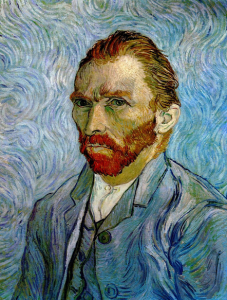 What is interesting about all of them is that the manner in which they attained fame was unique in every way. Leonardo da Vinci and Michelangelo were both famous in their time; royal patrons competed for their work, people fought over them, and there was a lot of writing about their amazing skills. Picasso also lived to see his fame, living long enough to see his name synonymous with innovation in painting during the 20th century. Van Gogh’s case was very different, since he only managed to sell one painting in his lifetime.
Famous Female Artists Who Changed the World
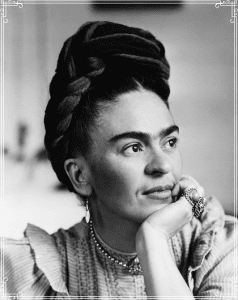
For a long time, art schools and workshops were unavailable to ladies; however, many of them overcame these obstacles and made an impact that remains evident today. For example, in the 17th century, despite the sad story of Artemisia Gentileschi’s life, she managed to paint biblical scenes with rare emotional depth for the period. Frida Kahlo managed to transform her suffering into images that reflected the artist’s strong character. Georgia O’Keeffe made a reputation by painting huge, almost abstract pictures of flowers and Southwestern landscapes of America.
Some other female artists who made an important contribution to the development of painting are:
- Gentileschi, Artemisia – Biblical paintings in Baroque style
- Kahlo, Frida – Self-portraits that made her a cultural icon
- O’Keeffe, Georgia – An innovator of American modern art
- Cassatt, Mary – The only American among Parisian Impressionists
- Kusama, Yayoi – Dot installations
- Morisot, Berthe – One of the founders of Impressionism
It was not only the painting itself that they accomplished; they revolutionized how women could find their place in the art world in the coming years.
Some had not only to deal with their artistic difficulties but also with practical problems, since, for many years, women were prohibited from participating in life-drawing classes—which involved working with nude models—and were therefore excluded from historical or mythological paintings, which were the pinnacle of the form.
The right to work and learn alongside men was not something that Artemisia Gentileschi gained easily; she had to fight for it through the law, and her characters—the strong women drawn from the Bible and mythology—are largely products of her own experiences.
Mary Cassatt, who came from an affluent family in America, consciously chose a profession deemed unbecoming of a woman of her station, eventually joining the ranks of the Impressionist artists in Paris. The artworks created by both women are now hanging alongside those of the celebrated male contemporaries in the world’s greatest museums. At the same time, their life histories become the subjects of literature, exhibits, and film productions.
Famous Artists Who Are Still Alive
But it is not only the past that can be rich in great artists, as there are artists among contemporaries whose artworks have already found their way into art history textbooks. David Hockney is an English painter who still experiments with form and color, even in old age, not only on canvas but also on the iPad. Jeff Koons made everyday objects and kitsch works that fetch millions at auction. Yayoi Kusama, who has already been discussed above, continues working on her famous installations of mirrors and dots, attracting millions of people around the globe.
It would be impossible to overlook the anonymous artist Banksy, whose identity is unknown and whose artworks are created in urban environments as social statements. Another artist worth mentioning is Gerhard Richter, a German master equally comfortable with both abstract and photorealistic styles.
All these people prove that painting is not a stagnant discipline confined to textbooks, but an ongoing process of evolution.
Modern masters are working under completely different conditions from those prevalent in the past: they have opportunities such as social media, attending international art exhibitions, and utilizing digital technologies, which were not even available to the masters of the past centuries.
For example, David Hockney was among the first to paint landscapes directly on a tablet, thereby showing that digital painting is no less expressive than oil painting. The fame of Banksy largely depends on his anonymity and his ability to interact with public space: his graffiti suddenly appears on walls and spreads rapidly across news feeds. This example shows how quickly a modern master can gain fame, compared to masters of the past centuries.
How Do Artists Become Famous?
This journey is never a direct one and certainly not determined by talent alone, but requires a combination of factors, including a distinctive style, the backing of powerful gallerists or collectors, a good stroke of luck as far as the historical context is concerned, and, of course, many years of hard work with no guarantees of eventual success.
It is also important that the place where an artist is nurtured contributes substantially to their development through access to education, exposure to previous artists’ work, and experience analyzing others’ methods. This is exactly why such centers of culture have attracted talented individuals for centuries: Florence during the Renaissance, Paris in the late 19th century, and New York in the middle of the 20th century.
Some of the stages that an individual might be able to identify during this journey include:
- A unique signature style that distinguishes the artist from peers.
- Exhibitions that are limited in scope and geographical scale.
- Recognition from critics, curators, or collectors.
- Works being acquired by museums and other large collections.
- Recognition that occurs even after death for several artists, including Vincent Van Gogh.
Moreover, the age at which people begin learning about art history and can see real paintings rather than those in books is also significant. This idea forms the basis of the Meet the Masters program, which consists of interactive multimedia classes in which children not only learn facts about paintings but also become familiar with the artists’ periods and techniques, thus creating a lifelong connection.
The program was founded by Bonnie Steele, who noticed that schools were making too many budget cuts to their art programs and decided to change it for the better; nowadays, the classes are used in thousands of schools and districts and districts across all fifty states of America.
In conclusion, fame in the art field comes from the combination of talent, the era, luck, and the legacy of previous generations that the new generation knows. Studying the lives and techniques of great masters, including Renaissance masters, pioneers, and experimentalists, we learn much beyond their names.
