
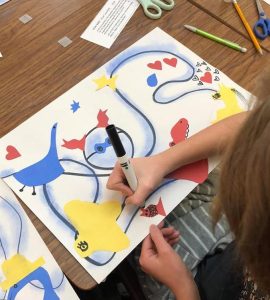
Some kids can tell you exactly what they’re feeling. Most can’t, not yet, not always.
Art gives them another way.
Color. Line. Pressure on the paper. The choice between soft blending and sharp, jagged marks.
Long before a child has the vocabulary to say “I’m anxious” or “I’m proud of myself,” they can communicate something real and true through what they make.
This isn’t just a poetic idea. It’s something teachers see in their classrooms, and something researchers have been documenting for years.
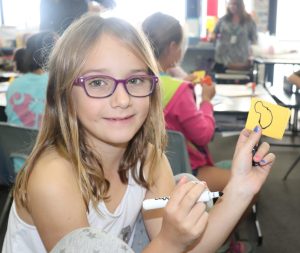
Art-making gives children access to their inner lives in a way that verbal language often can’t match.
Here’s what that looks like in practice with Meet the Masters:
- A safe place to take up space. The art project isn’t graded for accuracy. There’s no wrong answer. For students who spend most of the day trying to get things right, that matters more than we sometimes realize.
- Pride and self-worth. When a student finishes a piece they’re genuinely proud of, something they made with their own hands using real techniques from real artists, that feeling of capability sticks around. The student who thought they “couldn’t do art” leaves class holding their work like it’s a trophy.
- Connection to something bigger. Learning about Frida Kahlo’s life, her physical pain, her fierce self-expression, her refusal to be diminished, opens conversations about resilience that go far beyond art. The artists themselves become models for emotional strength.
- A shared language. When every classroom in the school is working on the same artist, students have something to talk to each other about. Art builds community, and community is one of the greatest emotional resources a child can have.
Art isn’t a frill. For a lot of kids, it’s where they find themselves.
Explore the full Meet the Masters program: meetthemasters.com/how-it-works
Warm regards,
Meet the Masters
Inspire – Educate – Create
Dig Deeper:
