
Impressionism started as an insult.
When Claude Monet and his fellow painters showed their work in 1874, a critic dismissed it as nothing more than an “impression,” unfinished, too loose, not serious art.
They took the name and ran with it.
A century and a half later, impressionist paintings are some of the most beloved in the world. There’s a lesson in that for your students.
Impressionism is built around the idea that art doesn’t have to be perfect to be powerful.
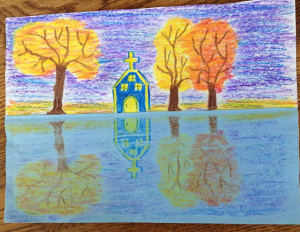
What matters is light, color, mood, and the feeling of a moment. A garden in the morning. A dancer mid-leap. A Sunday afternoon by the river. These paintings capture something real without obsessing over every detail.
That approach does something interesting for young artists.
It gives them permission to be expressive rather than precise. To use color boldly. To let brushstrokes be visible. To make something that feels alive rather than technically correct.
It also teaches them to look at everyday life with a painter’s eye.
To notice how the light through a classroom window changes throughout the day. How the colors in a face shift depending on where the light is coming from. How ordinary moments become worth paying attention to.
Four of our artists teach impressionism: Monet, Cassatt, Renoir, and Rousseau.
Four completely different approaches to the same fundamental idea, that what you feel when you look at something is just as valid as what you see.
See student work inspired by our impressionist artists: meetthemasters.com/artists
Meet the Masters
Inspire – Educate – Create
Dig Deeper:
