
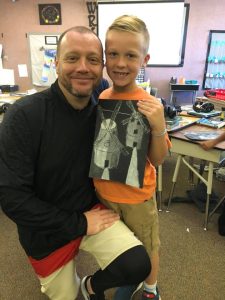
Before kids can break the rules of art, it helps to understand them.
That’s why realism is one of the most important techniques we teach, and one of the most rewarding for students to experience.
Realism isn’t just about making a drawing “look right.”
It’s about slowing down, paying attention, and training your eye to see proportion, light, shadow, and texture in the world around you. Those are skills that transfer well beyond the art room.
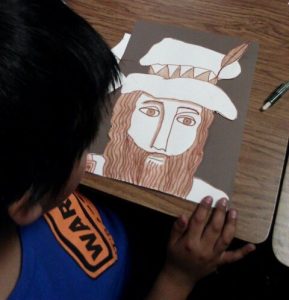
When students work in a realist style, they practice:
- Observation. How does the light fall on this object? What shape is that shadow, really?
- Patience and focus. Getting proportions right takes time. Students learn to stick with it.
- Confidence. There’s a moment every teacher knows: a student looks at their finished piece and says, “I made that?” Realism delivers that moment more than almost any other style.
It also opens doors.
Once a student understands the basics of representing the real world, abstract and impressionist techniques start to make more sense. You can’t fully appreciate what Picasso was breaking until you’ve first tried to draw something the way it actually looks.
Nine of our 35 master artists teach realism, including Rembrandt, Norman Rockwell, Leonardo da Vinci, Winslow Homer, and Grant Wood.
Each one brings a different flavor: historical portraiture, American storytelling, scientific observation, frontier landscapes. Your students get to try it all.
See what students create with our realism artists: meetthemasters.com
Warm regards,
Meet the Masters
Inspire – Educate – Create
Dig Deeper:
