
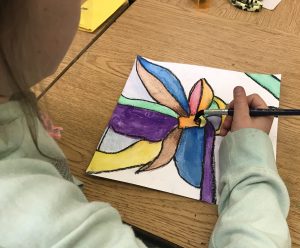
Tell a kid there’s no right answer, and watch what happens.
That’s the magic of abstract art. And it produces some of the most surprising, energetic, and genuinely original work you’ll ever see from a young artist.
Abstract art isn’t just squiggles and random color choices.
It’s intentional. It’s communicative. And it asks students to make real decisions about line, shape, color, and composition, without the safety net of trying to make something “look like” anything.
For a lot of kids, that freedom is liberating. For some, it’s a little unsettling at first. Both reactions are actually good starting points.
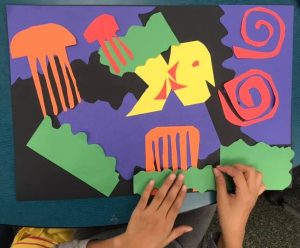
Here’s what working in an abstract style teaches:
- Self-expression. Without a subject to copy, students have to reach inside for what they want to communicate. Color becomes mood. Shape becomes feeling.
- Problem-solving. With no rules, every choice is a real choice. Kids learn to think intentionally about their work.
- Confidence. There’s no “wrong” result, and that matters more than you might think for students who believe they “can’t do art.”
Nine of our master artists work in abstract or semi-abstract styles, including Calder, Matisse, Mondrian, O’Keeffe, and M.C. Escher.
Each one approached abstraction differently, which gives students multiple entry points into a style that can feel intimidating at first.
By the time they’ve worked through even one of these artists, most kids have surprised themselves.
Explore our abstract artists and what students create: meetthemasters.com/artists
Warm regards,
Meet the Masters
Inspire – Educate – Create
Dig Deeper:
