
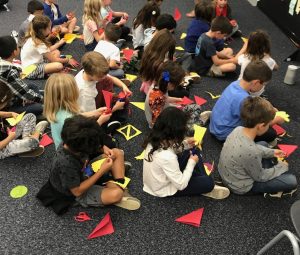
Every time a student picks up a pastel, rolls a piece of clay, or carefully places a dot of color on the page, something is happening beneath the surface.
Their hands are getting stronger. Their coordination is improving. Their brain and their fingers are building new connections.
Fine motor development doesn’t happen through drills. It happens through doing things that require precision, control, and repetition, and that feel worth doing.
Art is one of the best vehicles for it that we’ve ever found.
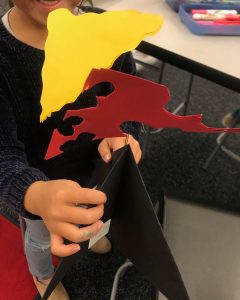
Here’s what students are developing through Meet the Masters projects, even when they’re just focused on having fun:
- Hand-eye coordination. Following a traced line, applying paint to a specific area, placing a collage piece exactly where it needs to go. All of this requires the hand and eye to work together in increasingly sophisticated ways.
- Grip strength and control. Holding a pastel, pressing clay, using scissors to cut tissue paper. Each medium demands something slightly different from the hand, building strength and dexterity across a range of motions.
- Pencil control. Worksheets and sketching exercises before the main project develop the kind of fine, controlled mark-making that also shows up in handwriting.
- Bilateral coordination. Many of our projects involve using both hands for different tasks at the same time, holding paper steady while drawing, or supporting clay while shaping it. This builds the brain-body coordination kids need for dozens of everyday tasks.
The art itself is the point. But the development that comes with it?
That’s a quiet bonus that shows up in the classroom long after the lesson is over.
Learn more about what students get from Meet the Masters: meetthemasters.com/how-it-works
Meet the Masters
Inspire – Educate – Create
Dig Deeper:
