
Around 1907, Pablo Picasso did something no one had done before.
He took a face and painted every angle of it simultaneously. Front view, side view, and everything in between, all at once on the same canvas.
It looked strange. People had no idea what to make of it.
It changed the art world forever.
Cubism is the idea that there’s more than one way to look at something, and you don’t have to choose just one.
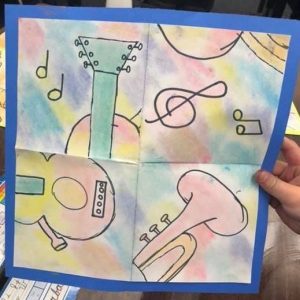
Break an object down into shapes. Rearrange it. Overlap it. Show it from multiple perspectives at the same time. The result might not look “real,” but it shows something true about how we actually experience the world.
For students, cubism is one of the most exciting techniques to try. Here’s why:
- It’s geometric. Kids who love shapes and patterns find it instantly engaging. It overlaps naturally with math: angles, symmetry, geometric forms, in a way that feels like play.
- It’s freeing. There’s no pressure to make a perfect likeness. The goal is to reconstruct, rearrange, and see what you come up with.
- It’s historically significant. Picasso didn’t just make unusual paintings. He fundamentally changed how artists thought about representing the world.
That last point is a big idea for a kid to sit with. The idea that one person’s bold decision can shift the direction of an entire art form.
Picasso is one of our 35 master artists, and he’s always a student favorite.
Learn about Picasso in the Meet the Masters program: meetthemasters.com/artists
Meet the Masters
Inspire – Educate – Create
Dig Deeper:
