
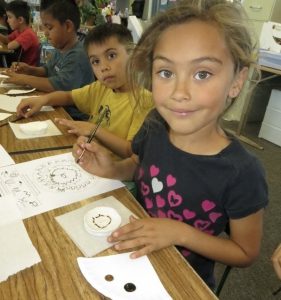
Clay projects stick with students longer than almost any other art lesson.
There’s something about working with their hands, shaping something three-dimensional, that makes the experience memorable.
But most schools don’t have kilns. And even if they do, firing takes weeks.
That’s why we use air-dry clay instead:
- It dries overnight.
- You don’t need special equipment.
- And the results hold up just as well as kiln-fired pieces.
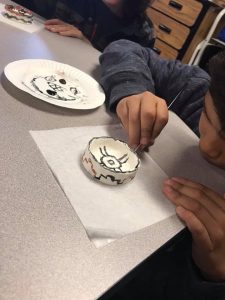
Students learn about Maria Martinez, one of the most celebrated Native American potters. Her black-on-black pottery is stunning, and her techniques translated beautifully to air-dry clay. Kids learn to shape coils, smooth surfaces, and create their own pottery-inspired pieces.
The tactile experience matters more than you’d think.
Every student’s fingerprints show up in their work. No two projects look identical, even when everyone follows the same steps. And that individuality builds confidence in a way flat art projects can’t quite match.
Here’s what teachers tell us:
- Clay projects become the ones students talk about at home. Parents hear about them weeks later. Something about working with their hands creates a stronger memory than drawing or painting.
- The mess is manageable. Wet clay wipes off tables easily. Dried bits sweep up. And you’re not dealing with paint stains or complicated cleanup.
So if you’re planning spring projects, consider adding clay.
The three-dimensional aspect brings variety to your art program, and students genuinely enjoy the hands-on experience.
See student pottery in our gallery.
Warm regards,
Meet the Masters
Inspire – Educate – Create
Dig Deeper:
