
TL;DR: Understanding Art Education and Integrating It Into School Curriculum
- Elementary schools can use art lessons for their regular teaching models.
- Art lessons based on artists are an incredible addition to the curriculum that help learners understand better and explore more.
- Meet the Masters brings well-curated art lessons for elementary schools and students.
The introduction of the art curriculum in schools has improved productivity and creativity among young learners. The role of art lessons seems invincible now. Art lessons can help learners learn about artists and their highly recognized art. Students can explore Paul Cezanne art work, Van Gogh’s paintings, and Leonardo da Vinci’s creations.
Art Lessons for Elementary Schools:
— Why should elementary schools emphasize art learning?
Elementary students are young learners who have just stepped into their learning era. Academics may not encourage them to learn directly. Schools may need to build their interest and define better approaches to educate them.
Introducing art learning to the curriculum might seem fun to learners. They may feel curious to visit schools and learn. It can be an easy way to start their learning journey.
Click here to learn more about art education.
— Can art lessons improve students’ productivity?
Yes! Whether you choose Van Gogh starry night lesson plans or Marc Chagall’s artwork, it will only benefit learners. Art is directly related to the learner’s imagination, creativity, and vision. Regular art learning can improve students’ productivity. Therefore, this introduction is considered a valuable addition to the school curriculum.
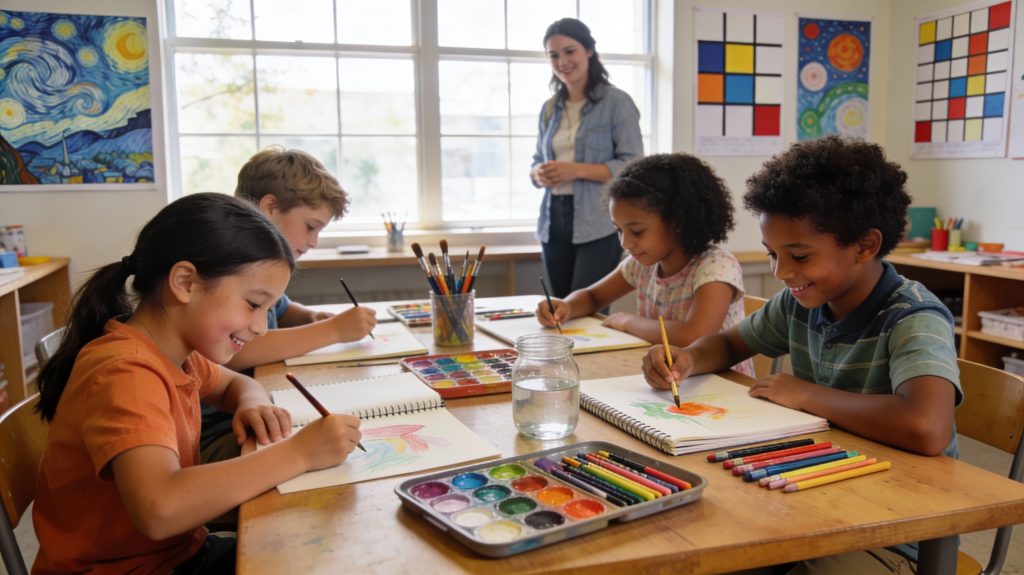
Art Lessons Based on Artists:
— Why should schools use art lessons based on famous artists?
Teaching kids to draw a house, a landscape, or similar regular drawings is boring. Teaching them about world-renowned artists can ignite interest and push them to their new limits. Also, famous artists use distinct art techniques, from painting, sketching, sculpting, to drawing and architecture.
Visit this Instagram account https://www.instagram.com/meetthemastersart/ for more information.
— Which are the top artists to prefer for art education in elementary schools?
Art lesson providers utilize artists and their artwork in framing lessons. These artists have created mesmerizing art lessons all their lives. Artists like Vincent Van Gogh, Paul Cezanne, Alexander Calder, and others are preferred for art education.
Check out a few lesson insights about the artist-based art lessons.
— What are the best choices to start art education for elementary students?
Piet Mondrian’s art is the easiest for elementary students. Beginning their art education with this can be beneficial.
About Meet the Masters:
Meet the Masters brings the best art lessons for young learners. You can use these lessons to teach students about Alexander Calder art style, Van Gogh’s drawings, and other art skills. These lessons fit your school curriculum perfectly and allow you to schedule art learning more conveniently. So, check out these art lessons now and educate youngsters about famous artwork.
Find out more at https://meetthemasters.com/
How does Meet the Masters align its artist-based art lessons with elementary school curriculum standards?
Meet the Masters designs its art lessons to complement elementary curriculum requirements by integrating art history, creative expression, and skill development in a structured, classroom-ready format that fits existing teaching models.
What makes Meet the Masters’ art lessons effective in improving creativity and engagement among young learners?
MTM lessons are based on well-known artists and hands-on activities, which naturally capture students’ interest. This approach encourages imagination, improves focus, and helps students connect learning with creative exploration.
How does Meet the Masters support teachers in delivering artist-focused art education?
Meet the Masters provides well-curated lesson plans, guided instruction materials, and flexible scheduling options, allowing teachers to confidently deliver meaningful art education without adding complexity to their daily classroom routines.
