
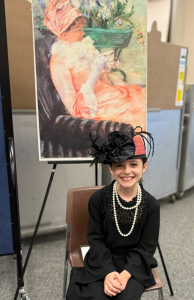
Students don’t think they’re learning history during art class.
They’re focused on mixing colors, shaping clay, or recreating Van Gogh’s swirling brushstrokes.
But while they’re creating, they’re also absorbing where these artists lived, what challenges they faced, and how their work reflected the world around them.
History sticks when it comes with a story and a hands-on experience.
Students remember Frida Kahlo’s bold self-portraits because they created their own version. They remember Leonardo da Vinci’s curiosity because they experimented with his techniques.
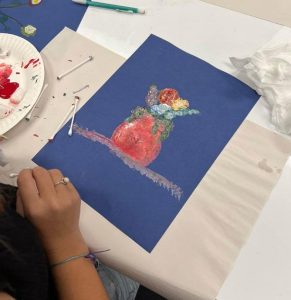
The grade-level structure matters more than it seems.
A kindergartener working on Monet gets a simpler version of the same project a fifth grader does. Both learn about impressionism, but the complexity matches their skill level.
That means every student succeeds, regardless of where they’re starting from.
And the confidence that builds from completing an art project carries over.
Students who finish a Picasso-style portrait walk a little taller. They see proof they can create something impressive. That feeling translates to trying harder in other subjects.
And the variety keeps them engaged.
Seven different artists means seven different styles, techniques, and time periods. They’re not doing the same type of project over and over. Each one feels new.
Art class becomes the place where they learn about the world through creating instead of just reading about it. The hands-on experience is what makes it memorable.
See what students create at meetthemasters.com/student-gallery.
Warm regards,
Meet the Masters
Inspire – Educate – Create
Dig Deeper:
