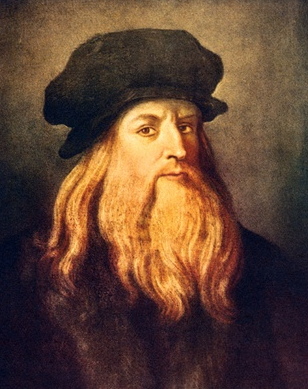
Leonardo da Vinci was an Italian Renaissance artist and inventor renowned for his paintings, including the Mona Lisa and The Last Supper. Leonardo da Vinci art style of art mainly entails realistic style of painting, good line work and attention to details, which have ensured the importance of Leonardo da Vinci in art lessons even after so many years. Even though people point to Leonardo da Vinci timeline for kids and mention Florence and Milan, what’s shared today is rarely the dates. It is about ways children can use his ideas.
Leonardo da Vinci for Kids: More Than Just a Painter
Many students hear about Leonardo mostly through his paintings. But his story is bigger than that. These days, many lessons also cover what he lived through. His close study of human anatomy is part of why his portraits still look so lifelike, and interactive Leonardo da Vinci projects for kids are based on the same curiosity and thirst for knowledge about his surroundings.
While examining proportions and details in a close-up look at his art, students also get a chance to learn more about his journals and inventions through short discussions before or after the drawing lesson. In addition to discovering Leonardo da Vinci artwork for kids beyond the Mona Lisa, students can explore his many talents and see what makes him worth studying even after hundreds of years. This approach can work well for teachers with students who are not as confident yet. It shifts the focus from skill to looking closely and asking questions.
Leonardo da Vinci Art Projects for Kids: Creating a Renaissance Portrait
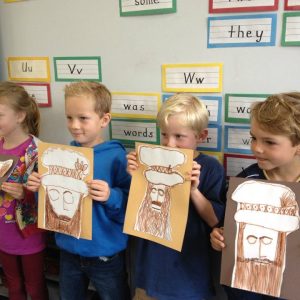
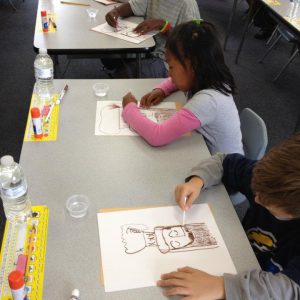
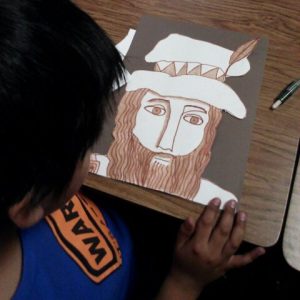
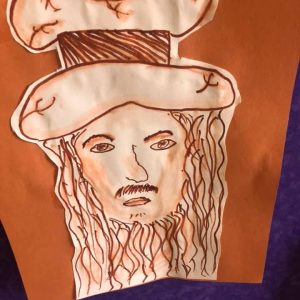
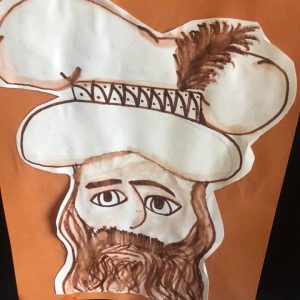
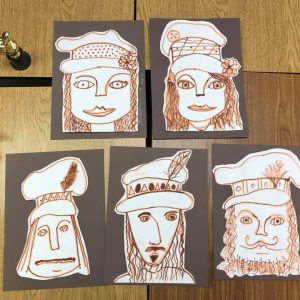
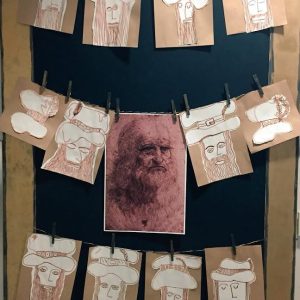
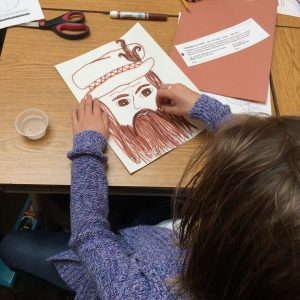
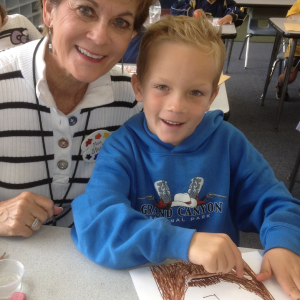
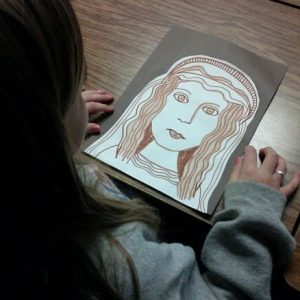
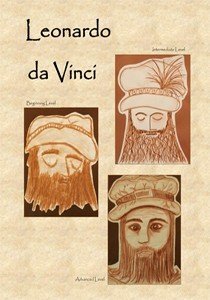
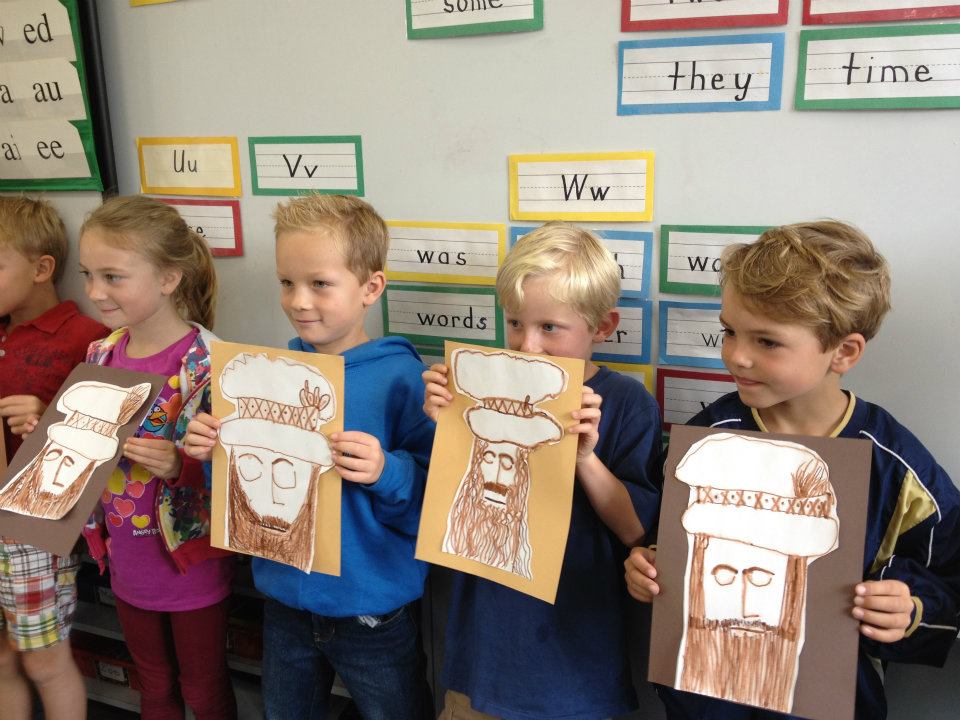
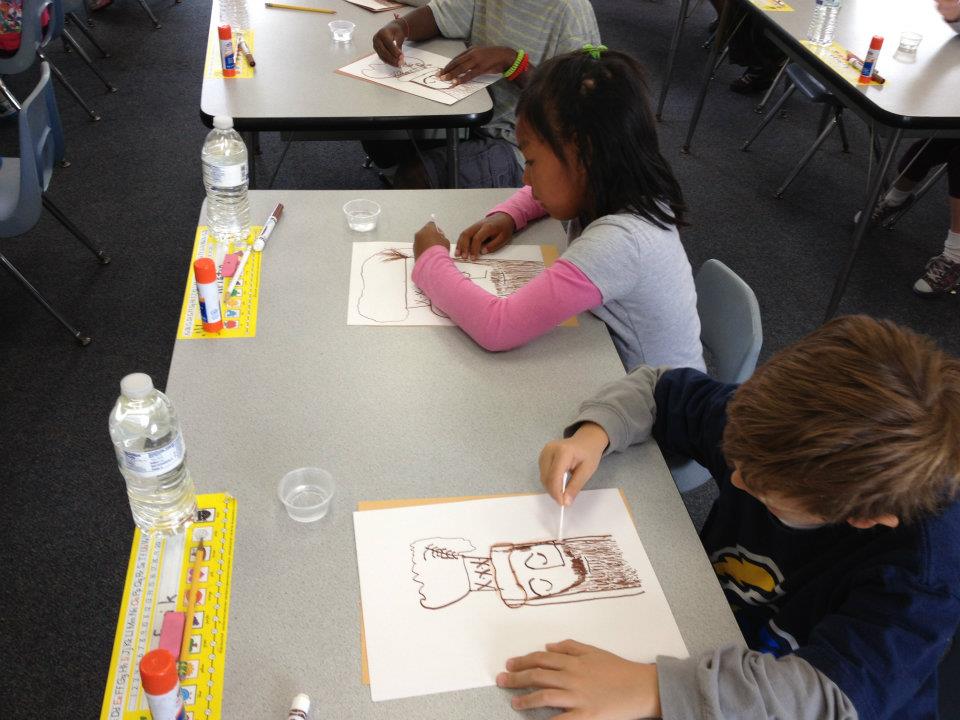
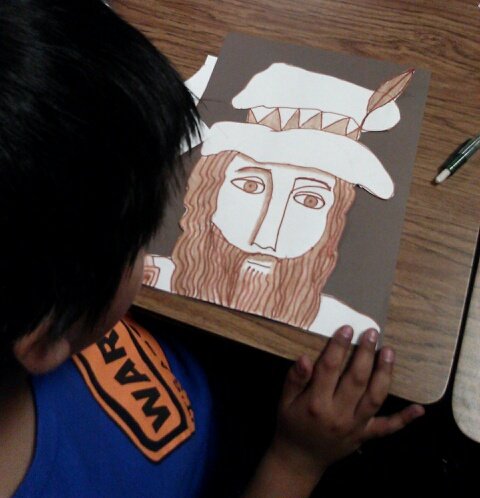
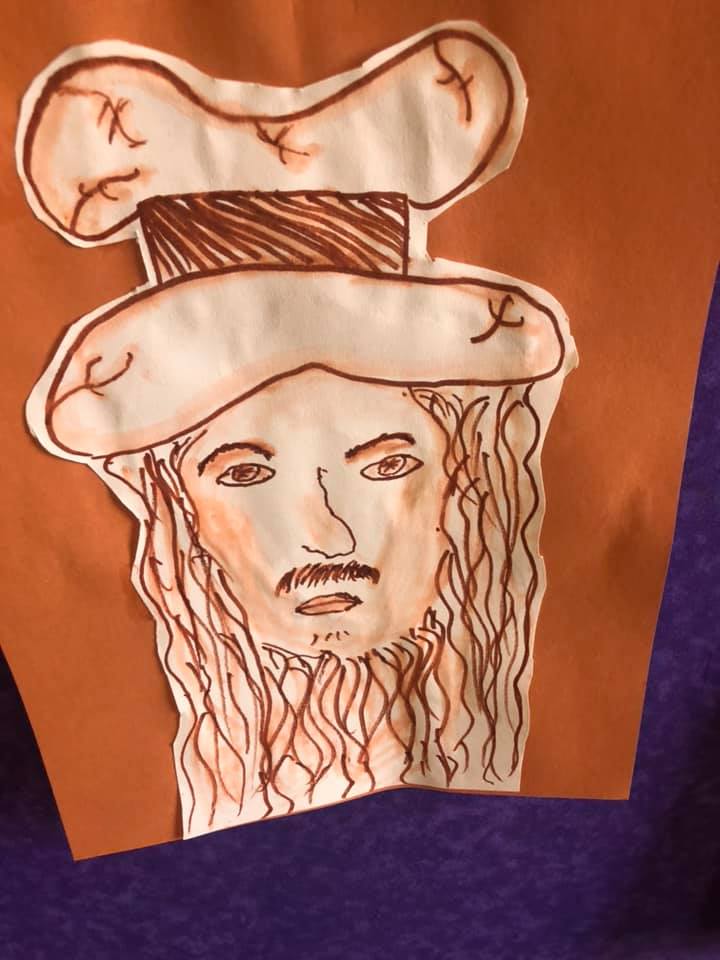
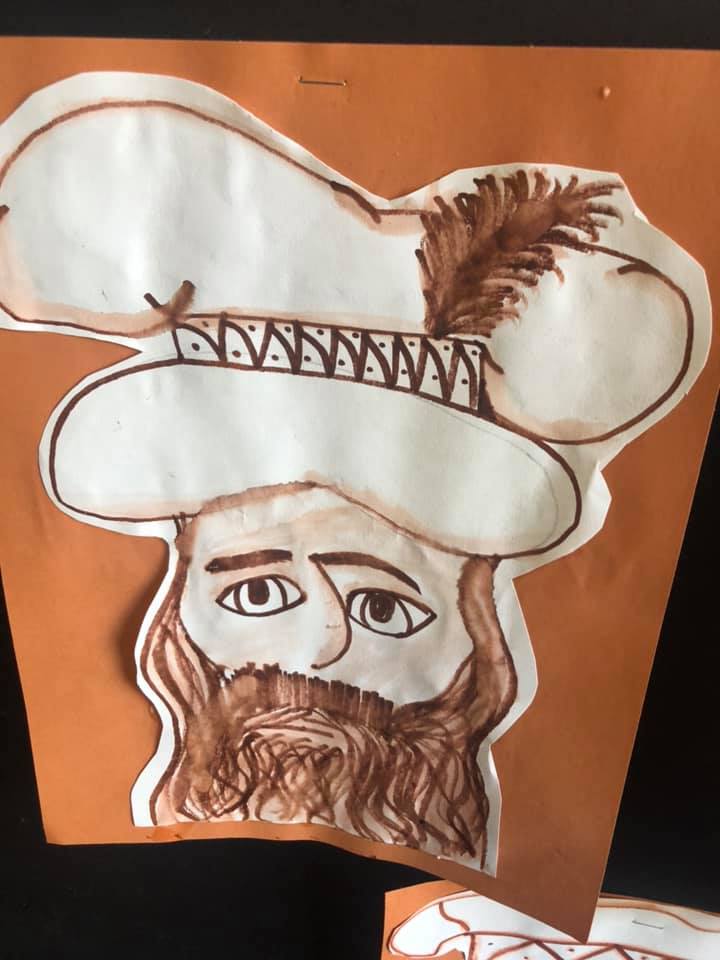
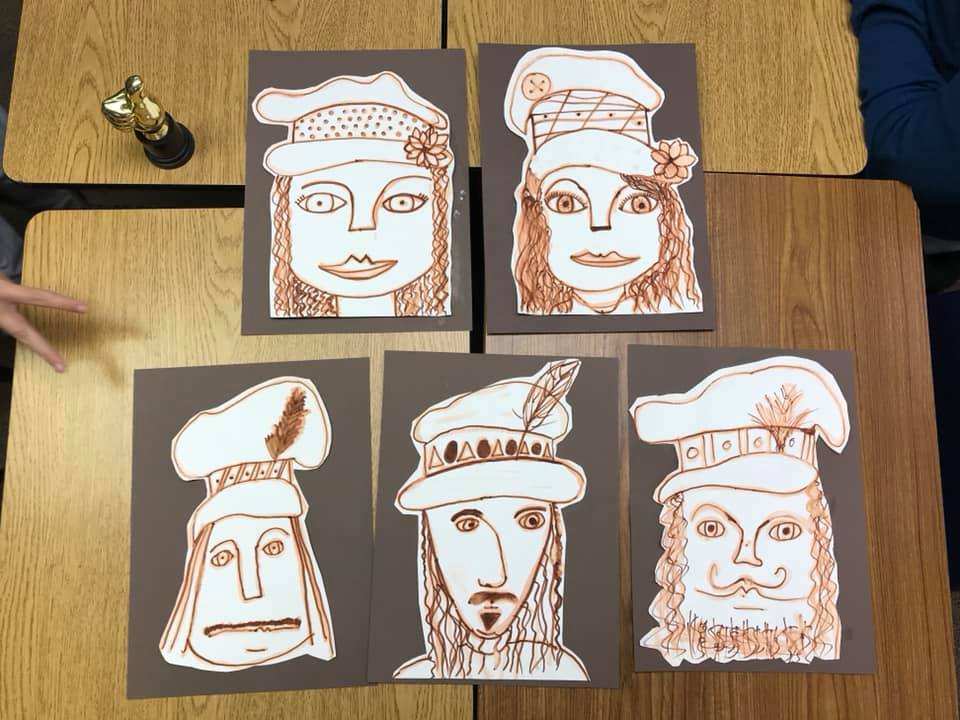
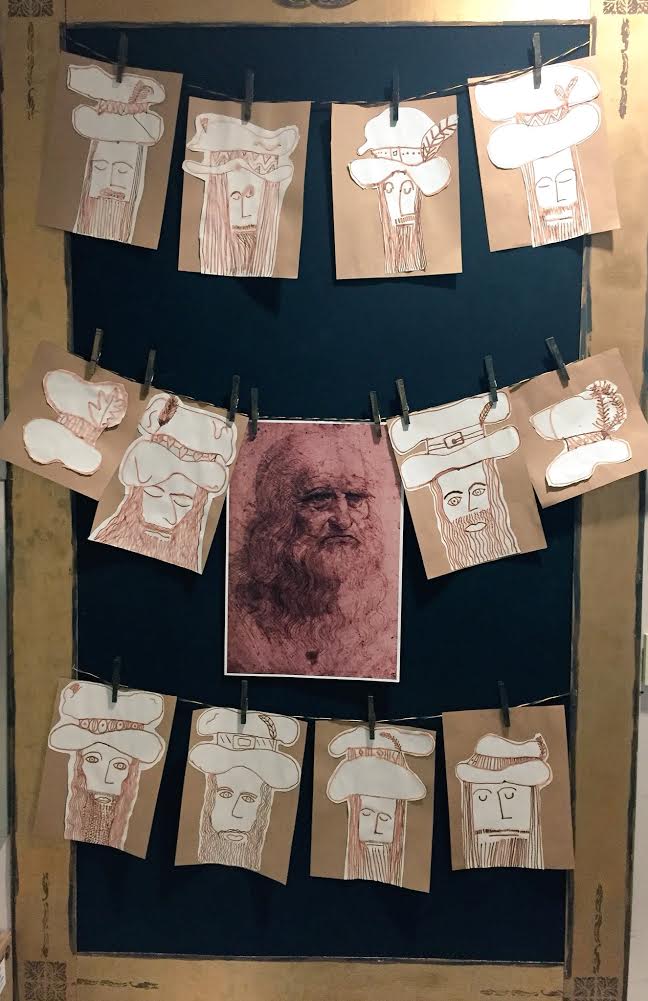
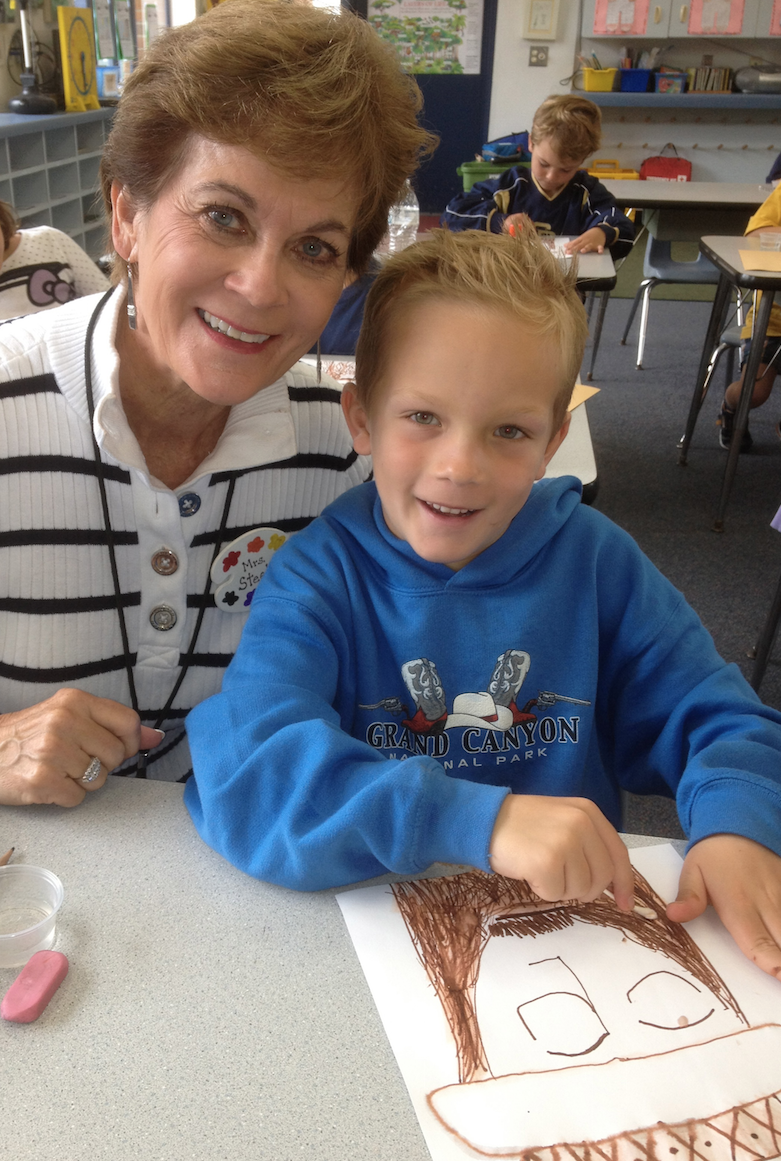
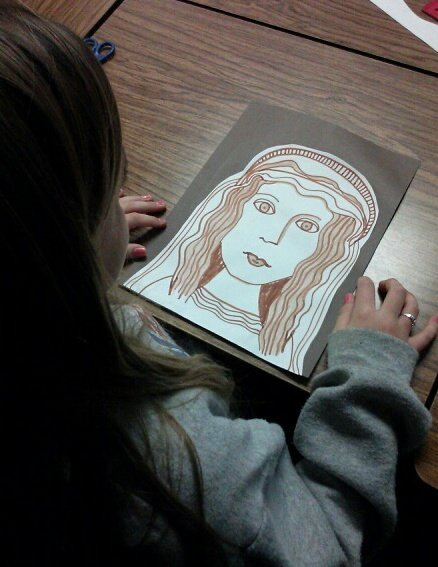
In the Meet the Masters class activity, kids will draw their own Renaissance-style portrait. They will use markers and paint swabs. They will also study the features of the human face, as Leonardo da Vinci did. The activity normally involves several distinct phases:
- Studying real proportion guides — comparing eye spacing, nose width, and jaw shape across different faces.
- Lightly sketching the basic head shape and placement of key features.
- Adding line detail to the eyes, nose, and mouth using markers.
- Building shading and contrast with paint swabs to give the portrait depth.
- Comparing finished portraits as a class to see how differently the same guidelines can turn out.
Translating close observation into a finished drawing is often the most challenging — and most rewarding — part of the project, since it asks students to slow down and really look rather than draw from memory.
In the lesson plan, the art skills cover words like contrast, details, line, portrait, realism, and the Renaissance. Each term is linked to a past time period when it comes up. This gives teachers an easy way to connect the drawing work to what they are already talking about.
FAQ
What are some good Leonardo da Vinci art for kids to look at first?
The Mona Lisa and The Last Supper are the most recognizable starting points.
Which Leonardo da Vinci paintings for kids show his realistic style best?
His portraits, especially the Mona Lisa, which highlight his skill with detail and proportion.
What art concepts does the classroom project teach?
Line, proportion, and realism, along with vocabulary like contrast and detail.
What materials does the classroom project use?
Markers and paint swabs. They are used together so kids can make line work and add shading.
Why do many teachers pick Leonardo da Vinci for art class at the elementary level?
Because his images are easy for students to recognize. Also, his art helps students practice looking closely. It teaches proportion in a way that works well for young learners.