
The art from this program (that my son participated in) decorated my walls for years. Great stuff! Looking forward to doing it with my grandchildren.

More results...
Christian education develops the whole child—mind, body, and spirit. The arts are part of God’s design, and every student is created with unique creative gifts to discover and develop.
Meet the Masters provides excellent arts education that:
The curriculum includes artists whose faith clearly influenced their work, from Renaissance masters creating religious masterpieces to modern artists exploring spiritual themes. Students learn that creativity glorifies God and that artistic excellence requires practice, dedication, and refinement of God-given talents.
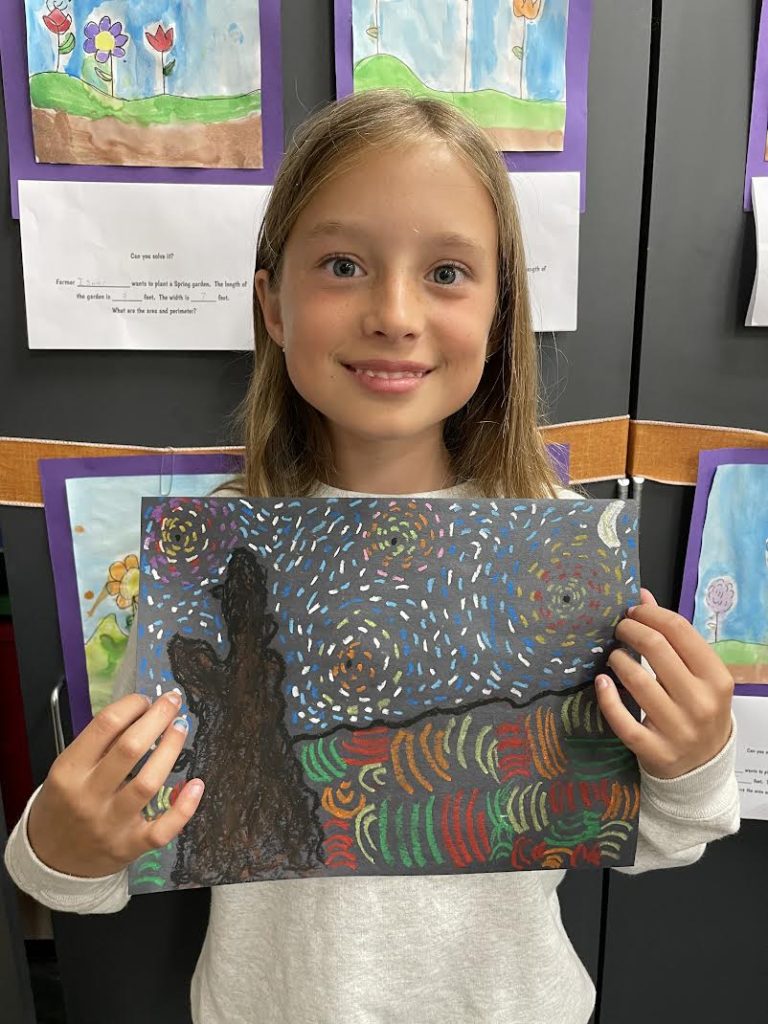

Students experience art history like never before. Through multimedia presentations featuring the history of iconic artists, period music, and engaging visuals, they discover the fascinating lives behind masterpieces they’ve seen everywhere but never really understood.
Picture Van Gogh explaining his swirling night skies. Frida Kahlo discussing her bold self-portraits. Leonardo da Vinci revealing his genius inventions.
The assembly transforms a plain multipurpose room (or classroom) into an interactive museum where students ask questions, play games, learn vocabulary, and connect emotionally with artists from different eras and cultures. They’re not just learning facts. They’re experiencing what made these artists revolutionary.
And here’s the game-changer: teachers simply follow the scripted presentation. Every word, every transition, every activity is mapped out. You could hand this to a parent volunteer tomorrow and watch them shine.

Students are already hooked on the artist’s story. Now they learn the revolutionary techniques that made the work famous.
Back in the classroom, students complete self-guided practice worksheets that break down complex artistic methods into simple, achievable steps. They’re learning pointillism, cubism, impressionism, tessellations, not through lectures but through doing.
These worksheets build confidence before the final project. Students practice the techniques on paper first, so when they pick up oil pastels or clay, they already feel like artists.

Students already know the artist’s story and have practiced their techniques. Now comes the magic.
Your classroom becomes an art studio. Students work with the same materials master artists used (oil pastels, metallic foil, sculpting clay, not cheap crayons) to create their own masterpieces in the artist’s style.
Teachers lead step-by-step using our detailed guides. Students follow along, adding their own creative touches. Even kids who usually say “I’m terrible at art” end up creating work that makes their parents cry at open house.
Every artist unit includes four different grade levels: Kindergarten, Beginner (grades 1-2), Intermediate (grades 3-4), and Advanced (grades 5-8). Same artist, same core lesson, but age-appropriate projects that challenge without overwhelming. Your 1st graders and 7th graders both succeed, just at different skill levels.
The art from this program (that my son participated in) decorated my walls for years. Great stuff! Looking forward to doing it with my grandchildren.
